Language
Patient vitals in 116 languages across borders, scripts, and care
The Care Gap
The Global Healthcare Gap
3.5 billion people lack adequate healthcare access. Remote villages see a doctor quarterly at best. For people managing chronic conditions, monitoring recovery, or caring for children, that gap is critical. Between visits, symptoms go untracked, medications unmonitored, conditions deteriorate.
Language Barriers Kill
Language barriers drive medical errors, missed diagnoses, lower treatment adherence, and worse outcomes. A hospital once translated "take one pill, twice a day" as "swallow a liver and dance with the moon." Screening information, treatment plans, and medication instructions require precision that machine translation alone cannot deliver.
Families Separated by Distance and Language
A grandmother in rural Tibet cannot communicate with her grandson studying medicine in Sydney. A Nigerian mother cannot understand her daughter's treatment plan in London. Caregivers across borders, unable to help. Patients alone with their conditions.
The Solution: Offline-First Patient Vitals Calendar
CareHub's Patient Vitals Calendar works offline. Track symptoms, medications, vitals, and mental health without internet. Upload when you reach signal. Rolling 90-day analysis in 116 languages. Patients track, caregivers monitor remotely, and providers review before appointments. Everyone sees the same data.
FamilyConnect™: Bridging Distance and Language
Real-time audio and video translation for family calls. Grandmother in Tibet speaks Tibetan; grandson in Sydney hears English. He replies in English; she hears Tibetan. Healthcare discussions across any language barrier. Family caregiving made possible regardless of geography or language.
Travel and Emergency Access
A doctor visit while travelling. An ER visit where you do not speak the language. Complete patient profile, treatment plan, medication list, and pill reminders, all accessible in 116 languages. Show the provider and they read it in their language. No interpreter needed. No delay.
Where We Actually Test in the Maasai
Built on NASA-Grade Standards
Our testing methodology draws from NASA's Deep Space Network protocols, the same systems used to communicate with Voyager, Mars rovers, and the James Webb Space Telescope. Our users deserve software that works reliably when the connection gets rough.
- NASA Deep Space Network (DSN): The interplanetary backbone we model our latency testing on
- What is the Deep Space Network?: NASA's overview
- DSN Now: Real-time visualization (genuinely cool)
- Mars 2020 Perseverance: Communication delays we simulate
Enterprise Partners: License
our extreme-condition testing framework.
Contact us about our DSN
simulation methodology →
116 Languages with Full Coverage
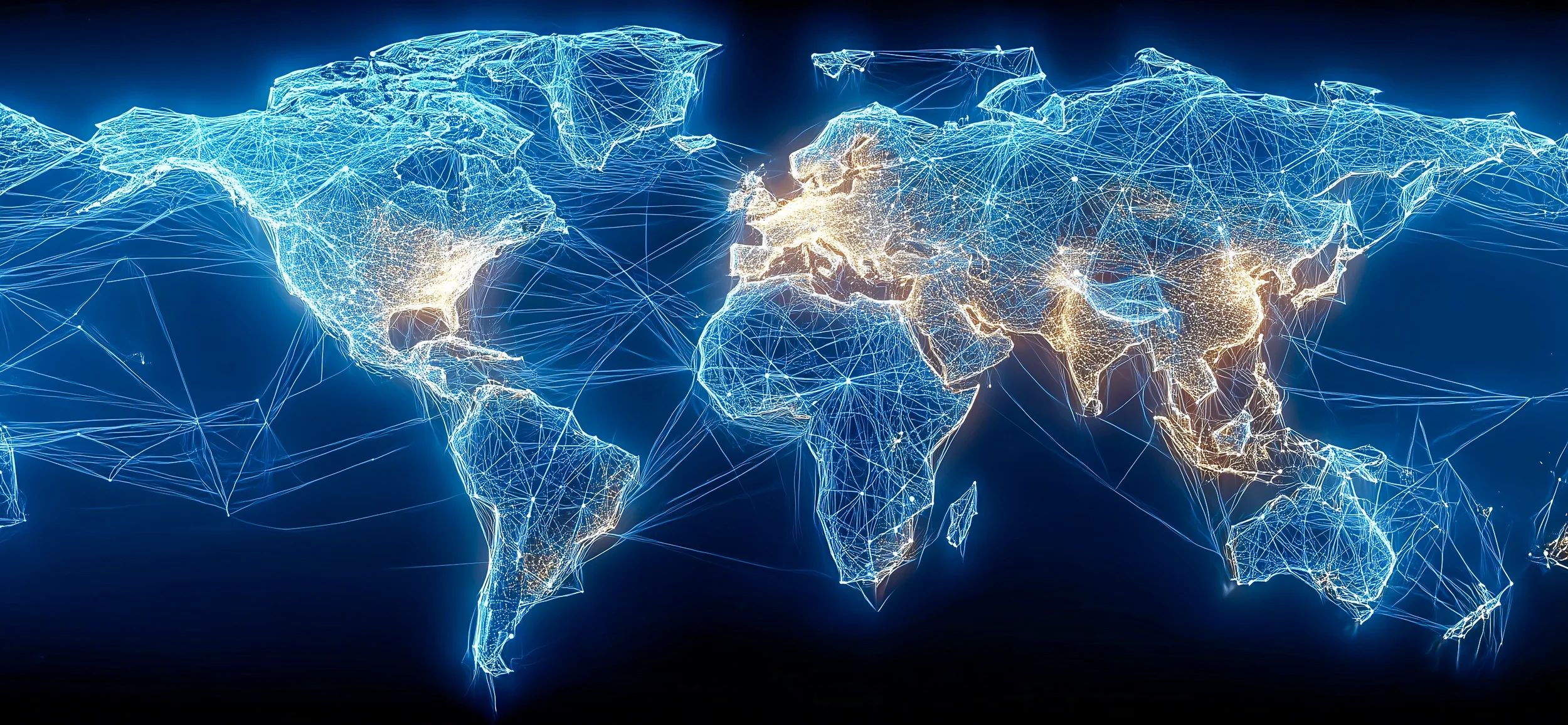
Global Coverage: 6 continents, 116 languages, 7.8 billion
speakers
Complete RTL support, indigenous language preservation, and coverage from
Nigeria to New Zealand, from the Andes to the Arctic. Click a region to explore its languages.
World Population by Language
| Language | Native Name | Speakers |
|---|---|---|
| Afrikaans | Afrikaans | 7M+ |
| Amharic | አማርኛ | 32M+ |
| Arabic | العربية | 420M+ |
| Bengali | বাংলা | 230M+ |
| Cantonese | 粵語 | 85M+ |
| Cree | ᓀᐦᐃᔭᐍᐏᐣ | 96K |
| Danish | Dansk | 6M+ |
| Dutch | Nederlands | 25M+ |
| English | English | 1.5B+ |
| Farsi | فارسی | 110M+ |
| Fijian | Na Vosa Vakaviti | 350K+ |
| Filipino | Filipino | 28M+ |
| French | Français | 280M+ |
| German | Deutsch | 130M+ |
| Greek | Ελληνικά | 13M+ |
| Guaraní | Avañe'ẽ | 6M+ |
| Hausa | Hausa | 80M+ |
| Hebrew | עברית | 9M+ |
| Hindi | हिन्दी | 600M+ |
| Igbo | Igbo | 30M+ |
| Indonesian | Bahasa Indonesia | 200M+ |
| Italian | Italiano | 65M+ |
| Japanese | 日本語 | 125M+ |
| Korean | 한국어 | 80M+ |
| Mandarin | 中文 | 1.1B+ |
| Māori | Te Reo Māori | 50K+ |
| Language | Native Name | Speakers |
|---|---|---|
| Navajo | Diné Bizaad | 170K |
| Norwegian | Norsk | 5M+ |
| Oromo | Oromoo | 37M+ |
| Polish | Polski | 45M+ |
| Portuguese | Português | 260M+ |
| Punjabi | ਪੰਜਾਬੀ | 125M+ |
| Quechua | Runasimi | 8M+ |
| Romanian | Română | 24M+ |
| Russian | Русский | 250M+ |
| Samoan | Gagana Sāmoa | 510K+ |
| Shona | chiShona | 15M+ |
| Somali | Soomaali | 22M+ |
| Spanish | Español | 500M+ |
| Swahili | Kiswahili | 200M+ |
| Swedish | Svenska | 10M+ |
| Tamil | தமிழ் | 75M+ |
| Thai | ภาษาไทย | 60M+ |
| Tibetan | བོད་སྐད་ | 6M+ |
| Turkish | Türkçe | 90M+ |
| Ukrainian | Українська | 40M+ |
| Urdu | اردو | 70M+ |
| Vietnamese | Tiếng Việt | 85M+ |
| Xhosa | isiXhosa | 19M+ |
| Yoruba | Yorùbá | 45M+ |
| Zulu | isiZulu | 27M+ |
Global Device Coverage: 100%
Works on Everything. Seriously.
75+ responsive breakpoints across
10 aspect ratios
ensures CareHub renders perfectly on 100% of devices globally
A grandmother in rural Tibet using a $50 Android phone sees the same
quality interface
as a specialist at a Tokyo hospital on a 4K display.
Record in your enkaji, sync at the cafe. There is a form for that
too.
That's a promise, not marketing.
16:9: Desktop & Laptop (9 breakpoints)
| Resolution | Devices | Status |
|---|---|---|
| 1366×768 | Budget Windows laptops, Chromebooks | ✅ |
| 1600×900 | Mid-range laptops, Dell Inspiron, HP Pavilion | ✅ |
| 1920×1080 | Standard FHD laptops, Dell XPS 13, HP Envy | ✅ |
| 2560×1440 | 27" monitors, iMac 5K (scaled), gaming displays | ✅ |
| 3200×1800 | High-end Windows, Dell XPS 15, Surface Book | ✅ |
| 3840×2160 | 4K monitors, 27" iMac Retina | ✅ |
| 5120×2880 | 27" iMac Retina 5K, Studio Display | ✅ |
| 7680×4320 | 8K displays, future-proofing | ✅ |
16:10: MacBook Displays (9 breakpoints)
| Resolution | Devices | Status |
|---|---|---|
| 1280×800 | MacBook Air 11" (2010-2015) | ✅ |
| 1440×900 | MacBook Air 13" (2010-2017) | ✅ |
| 1680×1050 | MacBook Pro 15" (pre-Retina) | ✅ |
| 2560×1600 | MacBook Air 13" M1/M2/M3 | ✅ |
| 2880×1800 | MacBook Air 15" M2/M3 | ✅ |
| 3072×1920 | MacBook Pro 16" M1/M2/M3 Pro/Max | ✅ |
| 3024×1964 | MacBook Pro 14" M1/M2/M3 Pro/Max | ✅ |
| 3840×2400 | Dell UltraSharp 38", LG UltraFine 5K | ✅ |
19.5:9: iPhone & Huawei (5 breakpoints)
| Resolution | Devices | Status |
|---|---|---|
| 750×1624 | iPhone SE 2nd/3rd Gen, iPhone 8/7/6s | ✅ |
| 828×1792 | iPhone 11, iPhone XR, Huawei P30, Huawei P20 Lite | ✅ |
| 1080×2340 | iPhone 13/12 mini, Xiaomi Mi 9, Xiaomi Mi 8, Huawei P30 Pro | ✅ |
| 1170×2532 | iPhone 15/14/13/12 Pro | ✅ |
| 1284×2778 | iPhone 15/14/13/12 Pro Max | ✅ |
20:9: Android Phones (4 breakpoints)
| Resolution | Devices | Status |
|---|---|---|
| 720×1600 | Galaxy A03/A13/A23, Moto G Power/Play, Nokia G20, Redmi Note 11, TCL 30 | ✅ |
| 1080×2400 | Pixel 5-8, OnePlus 9-11, Galaxy S21-S24, Galaxy A54/A73, Xiaomi 13T | ✅ |
| 1440×3200 | Galaxy S21-S24 Ultra, OnePlus 10/11 Pro, Xiaomi 13/14 Pro, Vivo X90 Pro, Oppo Find X6 Pro | ✅ |
| 1440×3216 | Galaxy Z Fold 3/4/5, Pixel Fold (inner display) | ✅ |
21:9: iPhone Portrait & Ultra-wide (6 breakpoints)
| Resolution | Devices | Status |
|---|---|---|
| 1440×3440 | iPhone 14/15 Pro Max portrait | ✅ |
| 1600×3840 | High-resolution iPhone portrait | ✅ |
| 3440×1440 | 34" ultra-wide monitors | ✅ |
| 3840×1600 | 38" ultra-wide monitors | ✅ |
| 5120×1440 | 49" super ultra-wide, Samsung CRG9 | ✅ |
| 5120×2160 | 49" 5K ultra-wide, Dell U4919DW | ✅ |
22:9 & 23:9: Foldables & Narrow (3 breakpoints)
| Resolution | Devices | Status |
|---|---|---|
| 1080×2636 | Galaxy Z Flip 5/4/3, Motorola Razr 40 Ultra | ✅ |
| 720×1840 | Vivo Y21/Y33, Redmi Note 10/11, Realme C35, Galaxy M13, Tecno Spark 9 | ✅ |
| 884×2778 | Galaxy Z Fold 5/4 outer display (cover screen) | ✅ |
4:3: iPad Displays (10 breakpoints)
| Resolution | Devices | Status |
|---|---|---|
| 768×1024 | iPad mini 1/2/3/4, iPad 2/3/4, original iPad | ✅ |
| 810×1080 | iPad 10th Gen (2022) | ✅ |
| 834×1112 | iPad Pro 10.5", iPad Air 3rd Gen | ✅ |
| 1024×1366 | iPad Pro 12.9" (1st/2nd gen) | ✅ |
| 1536×2048 | iPad mini 5/6, iPad Air 1/2 Retina | ✅ |
| 1620×2160 | iPad 10th Gen Retina | ✅ |
| 1668×2224 | iPad Air 4/5/6, iPad 10th gen | ✅ |
| 2048×2732 | iPad Pro 12.9" M1/M2 (3rd-6th gen) | ✅ |
3:2: Surface Devices (7 breakpoints)
| Resolution | Devices | Status |
|---|---|---|
| 1368×912 | Surface Pro 7/8/9, Surface Go 2/3 | ✅ |
| 1500×1000 | Surface Laptop Go, Surface Book (scaled) | ✅ |
| 1800×1200 | Surface Go (native) | ✅ |
| 2256×1504 | Surface Laptop 13.5", Surface Book 2/3 | ✅ |
| 2496×1664 | Surface Laptop Studio, Surface Book 3 15" | ✅ |
| 2736×1824 | Surface Pro 7/8/9 (native PixelSense) | ✅ |
| 2880×1920 | Surface Laptop 4/5 13.5" (native) | ✅ |
5:4: Specialized Displays (1 breakpoint)
| Resolution | Devices | Status |
|---|---|---|
| 1280×1024 | Legacy Dell monitors, medical displays, POS systems | ✅ |
Runway From Here

Voice Accessibility
In Development
- "Read this page to me" button on all public content
- Voice navigation: "Go to Mind page", "Show treatment options"
- Voice-to-text in all 116 languages
- Downloadable audio files for offline access during treatment
- AI Voice Synthesis: Natural voice for all 116 languages
- Real-time translation: Live conversation translation for telehealth
- Regional variants: Mexican/Spain Spanish, Brazilian/Portugal Portuguese, Traditional/Simplified Chinese
- Personalized voice: User preference for voice gender, age, accent
Community Expansion
- Community submissions: Native speakers submit translations for validation
- Dialect support: Regional variations (Mexican vs Spain Spanish, Brazilian vs Portugal Portuguese)
- Endangered languages: Partnerships with linguistic preservation organizations
Quality Assurance Framework
AI enables speed and scale, but human validation ensures accuracy and cultural sensitivity. Our multi-layer quality assurance framework combines the best of both worlds.
Google Gemini for general content: We use Google Gemini to accelerate draft translation for general informational content. We chose this source for trust, long-term stability, and strong AI pioneer credentials, rather than a short-lived tool tied to a single-owner toy project. For treatment-critical and medically sensitive language, publication requires human review and signoff before release. In our workflow, once a translation receives two independent confirmations, it becomes canonical (our gospel version) until superseded by a later reviewed update.
Scope clarity: AI translation automation is app-scoped; this public website content is curated and updated manually.
Medical safety: Medically sensitive and treatment-critical wording cannot publish without explicit human signoff.
Translation Source & Methodology
Our 116-language rollout uses a staged quality model. All 115 non-English languages currently include AI-generated coverage for the core vitals-tracking namespaces, produced with medical terminology context rather than generic consumer phrasing.
Those drafts are then checked through our in-app beta feedback workflow, where native speakers can flag awkward wording, correct regional phrasing, and confirm terminology before reviewed updates are promoted.
Translation Quality Process
Treatment-critical wording requires explicit human review before publication. Once a translation receives two independent confirmations, it becomes the canonical in-app version until a later reviewed update replaces it.
Last translation policy update: 23 February 2026